How I Stopped Chasing Gains and Finally Grew My Wealth
You’re not alone if you’ve ever felt anxious watching your investments swing wildly, wondering whether to hold on or bail out. I’ve been there—chasing hot stocks, fearing missed opportunities, and making emotional calls. Over time, I realized that real progress in investing isn’t about timing the market, but mastering your mindset. It’s the quiet discipline behind decisions that truly shapes long-term financial success. The journey from reactive trading to thoughtful wealth building wasn’t immediate, but it was transformative. This is the story of how I stopped chasing quick wins and started building something lasting—a portfolio rooted in patience, clarity, and resilience.
The Moment I Realized My Investing Mindset Was Broken
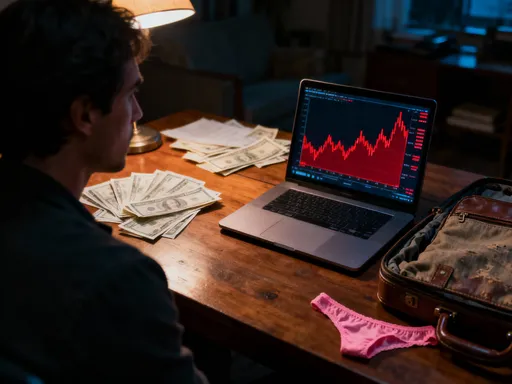
For years, I believed that successful investing meant identifying the next big stock before anyone else. I scoured financial news, followed market gurus on social media, and celebrated every short-term gain as proof of my skill. When a stock I owned surged 20% in a week, I felt like a genius. But when the same stock dropped 30% the following month, I panicked and sold—locking in a loss and missing the eventual recovery. This cycle repeated itself over and over: excitement, fear, action, regret. Each decision was driven not by analysis, but by emotion. I wasn’t managing my money—I was reacting to it.
The turning point came after a particularly painful experience. I had poured a significant portion of my savings into a trendy tech stock based on a viral article and a friend’s recommendation. The price soared initially, fueling my confidence. But within months, the company reported weaker-than-expected earnings, and the stock plummeted. Instead of assessing the fundamentals, I held on, hoping for a rebound. Then, as losses deepened, I sold in frustration—only to watch it recover six months later. That moment stung not because of the financial loss, though that was real, but because I saw clearly: my behavior was the problem. The market didn’t trick me. My impatience, my fear of loss, and my need for validation had led me astray. I began to understand that the greatest risk in investing isn’t market volatility—it’s our own psychology.
Recognizing this flaw didn’t fix everything overnight, but it opened the door to change. I started asking different questions: What am I really investing for? How much risk can I truly tolerate? What does success look like beyond a rising stock price? These weren’t just financial questions—they were personal ones. I realized that without aligning my investment approach with my actual goals and emotional capacity, I would keep repeating the same mistakes. The shift began not with a new strategy, but with a new mindset: one rooted in self-awareness, long-term thinking, and humility.
Why Emotional Reactions Sabotage Long-Term Wealth
Emotions are a natural part of being human, but they are a poor guide for financial decisions. When fear or greed takes control, it distorts judgment and leads to behaviors that undermine wealth creation. One of the most damaging patterns is buying high and selling low—a behavior that seems irrational in hindsight but feels justified in the moment. During market rallies, optimism spreads quickly. News headlines proclaim a new bull market, friends brag about their gains, and the fear of missing out pushes investors to jump in at peak prices. Then, when the market corrects, the same emotions flip: panic sets in, doubts grow, and many sell at the worst possible time, turning temporary paper losses into permanent ones.
Research supports this reality. Studies have shown that the average investor underperforms the market over time, not because they lack access to good investments, but because of poor timing driven by emotion. According to data from Dalbar, Inc., over a 20-year period, the average equity fund investor earned annual returns significantly lower than the S&P 500 index—largely due to buying and selling at inopportune times. This performance gap isn’t caused by a lack of intelligence or information; it’s the result of emotional decision-making. The market rewards patience and consistency, but human nature often pulls us in the opposite direction.
The irony is that the very emotions meant to protect us—fear keeping us from danger, greed driving us to seize opportunity—can become liabilities in investing. Fear makes us risk-averse when risk-taking is necessary, and greed makes us reckless when caution is needed. Overcoming this requires recognizing that wealth building is not a sprint, but a marathon. It’s not about capturing every upswing or avoiding every downturn. It’s about staying the course, allowing compounding to work, and avoiding costly detours caused by emotional impulses. The path to long-term financial health isn’t found in perfect predictions, but in consistent behavior—even when it feels uncomfortable.
Shifting from Speculation to Strategic Ownership
The most important shift in my journey was changing how I viewed investments. I stopped seeing stocks as ticker symbols that moved up and down and started seeing them as ownership stakes in real businesses. This mental reframe transformed my relationship with the market. Instead of reacting to price changes, I began asking questions like: What does this company do? Is it profitable? Does it have a sustainable competitive advantage? How is it managed? These are the same questions an actual business owner would ask—not a gambler looking for a quick score.
This approach didn’t eliminate market volatility, but it gave me a stronger foundation for decision-making. When a stock I owned dropped 15% in a quarter, I no longer assumed it was a sign to sell. Instead, I looked at the company’s financial health, earnings reports, and long-term strategy. If the fundamentals were still strong, I viewed the price decline as a potential opportunity, not a disaster. This doesn’t mean I ignored risks—I still assessed them carefully—but I stopped letting short-term noise dictate my actions. I began to understand that market prices reflect sentiment, but true value comes from a company’s ability to generate profits over time.
One example of this shift was my decision to invest in a diversified fund focused on established companies with consistent earnings. These weren’t the flashiest stocks, and they didn’t make headlines every week. But they had strong balance sheets, reliable cash flows, and a history of weathering economic downturns. Over time, this fund delivered steady growth, even during periods of market turbulence. More importantly, I was able to hold on without anxiety because I understood what I owned and why. I wasn’t betting on a miracle—I was participating in the long-term success of real businesses. That sense of ownership gave me confidence and stability, two qualities that speculation can never provide.
Building a Framework That Works When Emotions Don’t
Willpower is unreliable. No matter how disciplined we aim to be, stress, fatigue, or unexpected events can erode our resolve. That’s why I learned to rely not on motivation, but on structure. I built a simple but effective investment framework designed to protect me from myself. The first rule: I only invest money I won’t need for at least five to ten years. This ensures that short-term market swings don’t force me to sell at a loss. The second rule: I rebalance my portfolio once a year, regardless of market conditions. This automatically sells assets that have grown too large and buys those that have fallen, maintaining my target allocation without emotional interference.
Another key rule is to avoid making any investment decision during periods of high market volatility. When news is chaotic and prices are swinging wildly, I pause. I don’t check my account daily, and I don’t react to headlines. Instead, I wait until the noise settles and I can think clearly. This simple habit has saved me from countless impulsive moves. I also set up automatic contributions to my investment accounts, so I’m consistently adding money regardless of market conditions. This practice, known as dollar-cost averaging, means I buy more shares when prices are low and fewer when they’re high—without having to time the market.
These rules aren’t glamorous, and they don’t promise outsized returns. But they provide something more valuable: protection from costly mistakes. They create a buffer between my emotions and my money. Over time, this structure has done more for my wealth than any stock pick or market prediction. It’s like having guardrails on a winding road—they don’t make the journey faster, but they keep you from going off the edge. By focusing on process rather than outcomes, I’ve built a system that works even when I’m not at my best.
How Discipline Outperforms Even the Best Predictions
No one can consistently predict the stock market. Economists, analysts, and financial experts have tried for decades, and even the most sophisticated models fail to forecast short-term movements with any reliability. Yet many individual investors act as if they can beat the odds by reacting to news or following trends. The truth is, even if you’re right 60% of the time, emotional trading will likely cost you more than it gains. Discipline, on the other hand, doesn’t require being right—it only requires being consistent.
Consider the power of compounding. When you reinvest your returns over time, your money grows exponentially. But compounding only works if you stay invested. Every time you exit the market out of fear, you break the chain. Every time you chase a hot stock, you risk diverting capital from a balanced strategy. Discipline allows compounding to do its work, quietly and steadily, without interruption. It means showing up month after month, year after year, regardless of what’s happening in the world.
I’ve seen this play out in my own portfolio. There were years when my diversified holdings returned only 3% or 4%, while some speculative stocks soared. It was tempting to abandon my plan. But I stayed the course. And over a decade, my portfolio grew at an average annual rate that outpaced inflation and met my long-term goals. I didn’t achieve this by picking winners—I achieved it by avoiding losers and staying invested. The math of investing favors consistency over heroics. You don’t need to be a genius to build wealth. You just need to avoid the big mistakes and let time work in your favor.
The Real Goal: Financial Calm, Not Constant Gains
My definition of financial success has changed. It’s no longer about how high my portfolio number climbs, but whether I can sleep at night. I’ve learned to see market volatility not as a threat, but as a normal part of investing. Just as the seasons change, markets go through cycles of growth and contraction. Trying to avoid every downturn is like trying to stop the rain—it’s futile and counterproductive. What matters is having a plan that can withstand the storms.
Financial calm means knowing your goals, understanding your risk tolerance, and having a strategy that aligns with both. It means not checking your account balance every day or reacting to every economic headline. It means being prepared for setbacks without being paralyzed by them. When I adopted this mindset, I noticed a shift not just in my finances, but in my overall well-being. I felt less anxious, more in control, and more focused on what truly matters—my family, my health, my peace of mind.
This doesn’t mean I’ve stopped caring about returns. I still review my investments regularly and make adjustments when necessary. But I do so with a sense of purpose, not panic. I’ve accepted that I won’t capture every gain, and that’s okay. My goal isn’t to maximize returns at all costs—it’s to build sustainable, long-term wealth that supports the life I want to live. And that kind of success isn’t measured in quarterly statements, but in confidence, stability, and freedom from financial fear.
Putting It All Together: A Sustainable Path Forward
Building real wealth isn’t about finding a secret formula or chasing the latest trend. It’s about alignment—between your financial goals, your time horizon, and your emotional temperament. When these elements are in sync, investing becomes less stressful and more effective. I now approach my portfolio as a long-term project, not a series of bets. I review it annually, make adjustments based on life changes, and stay focused on the big picture. I don’t expect perfection, and I don’t demand constant growth. I accept that markets will fluctuate, and I trust that my strategy will carry me through.
This journey has taught me that the most powerful financial tool isn’t a stock tip, a hot fund, or a market prediction—it’s patience. Patience to stay invested when others are fleeing. Patience to ignore the noise and focus on what matters. Patience to let compounding work over years and decades. It’s not exciting, but it’s effective. I’ve also learned the value of simplicity. A well-diversified portfolio of low-cost index funds and quality dividend-paying stocks has served me better than any complex strategy ever did. I don’t need to outsmart the market—I just need to stay in it.
For anyone feeling overwhelmed by investing, my advice is this: start by understanding yourself. What are your goals? How much risk can you handle without losing sleep? Then, build a simple, disciplined plan that reflects those answers. Automate your savings, stick to your allocation, and avoid the temptation to do something just because the market is moving. Let time, consistency, and discipline do the heavy lifting. Wealth isn’t built in a day, but over years of quiet, steady progress. And when you finally stop chasing gains, you might just find that you’ve grown your wealth all along.