Lost in the Rhythm of San Juan’s Hidden Corners
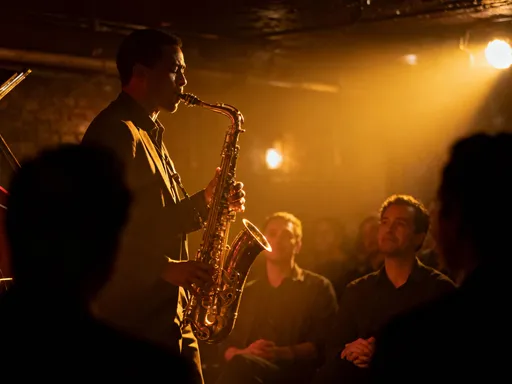
You know that feeling when a city just gets you? San Juan isn’t just postcard views and old forts—it’s the hum of salsa from a corner bar, the smell of fried plantains on a breezy plaza. I wandered without a plan and found soul in the slow moments: sunsets on quiet benches, laughter in leafy parks, and cafés where time forgets to rush. This isn’t about ticking sights off a list. It’s about being there. Let me take you through the laid-back heart of Puerto Rico’s capital—where leisure isn’t planned, it’s lived.
The Pulse of Old San Juan: More Than Just Cobblestones
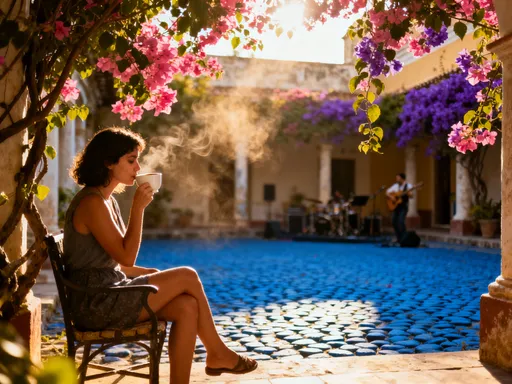
Old San Juan is often described in postcard terms—blue cobblestone streets, pastel colonial buildings, and the imposing silhouette of El Morro fortress. But to walk its lanes without feeling its rhythm is to miss the point entirely. This is a neighborhood that breathes, pulses, and invites you to match its tempo. While tourists flock to the forts and souvenir shops, the true essence of leisure reveals itself in the in-between moments: a street artist tuning his guitar beneath a bougainvillea-draped arch, an elderly couple sharing a bench near Plaza del Cristo, or the sudden burst of laughter from a hidden courtyard where neighbors gather over coffee.
What makes Old San Juan so uniquely suited to unhurried exploration is its human scale. The narrow streets discourage haste. You cannot rush here—not in heels, not with strollers, not even in thought. Each turn offers a new invitation: a shaded alcove with a hand-painted sign for fresh coconut water, a tiny chapel with its door ajar and candles flickering inside, or a balcony overflowing with red hibiscus. These are not attractions to be checked off, but experiences to be absorbed. The city rewards those who pause, who let their feet guide them rather than a map.
Yet, with growing popularity comes tension. The delicate balance between tourism and authenticity is evident. Cruise ships disgorge thousands each morning, and certain streets buzz with energy that borders on chaos. But step just one block off Calle Fortaleza or San Sebastián, and the noise softens. Plazas like Plaza de la Concepción or the quieter corners of Plaza de la Catedral remain sanctuaries. Here, local life unfolds as it has for generations—children chase pigeons, grandmothers fan themselves on benches, and shopkeepers greet regulars by name. These spaces are not preserved for show; they are lived in, loved, and protected by those who call Old San Juan home.
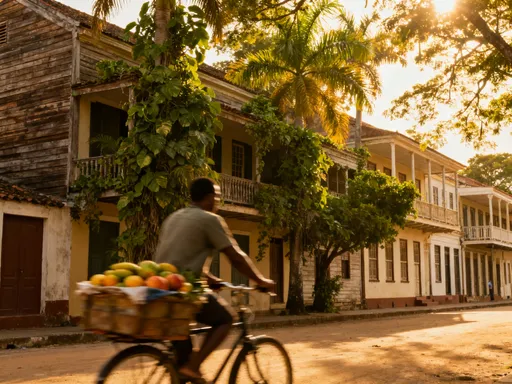
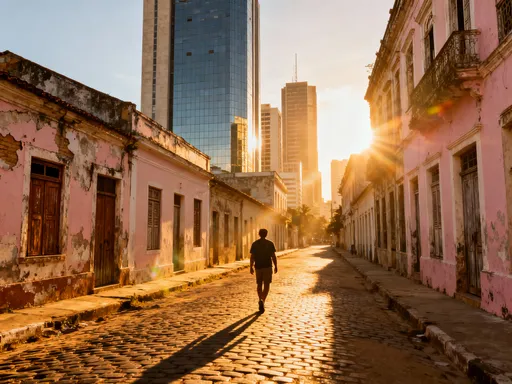
To truly experience this balance, visit in the early morning or late afternoon. Arrive before the cruise crowds, and you’ll find the city stretching awake—bakers pulling warm pan de agua from ovens, fishermen unloading their catch near La Perla, and street sweepers chatting as they mop the blue stones. Return at golden hour, when the sun casts a honeyed glow on the pastel walls, and the air carries the scent of jasmine and frying bacalaitos. In these quieter times, the city’s soul is not hidden—it is generous, open, and waiting.
Plaza de Armas: The Living Room of the City
If Old San Juan has a heartbeat, it pulses strongest in Plaza de Armas. Located near the Governor’s Mansion and the historic city gate, this central square functions as the city’s living room—a place where formal history meets everyday life. Shaded by towering ceiba and mahogany trees, the plaza is a haven of dappled light and gentle conversation. Unlike more ornate plazas, its charm lies in its simplicity: green benches arranged in a circle, a central fountain murmuring softly, and the occasional flutter of doves taking flight.
Locals treat Plaza de Armas as an extension of their homes. Retirees gather in the late morning for animated games of dominoes, their hands moving with practiced ease as onlookers cheer or tease. Schoolchildren stop by after classes, swinging from the wrought-iron lampposts or chasing bubbles blown by a street performer. In the late afternoon, office workers unwind with a café con leche from a nearby kiosk, their dress shoes tapping lightly on the stone path. Even on weekdays, the plaza hums with a low, steady energy—a reminder that public spaces thrive when they are used, not just visited.
What makes Plaza de Armas so effective as a leisure destination is its accessibility. There are no tickets, no opening hours, no formal programs. You simply arrive. You sit. You stay. And in doing so, you become part of the scene. This is not passive observation; it is quiet participation. A woman reading a novel becomes part of the ambiance. A man napping on a bench adds to the sense of ease. The plaza does not demand engagement, but it rewards presence.
In recent years, city planners have recognized the importance of such spaces. Benches have been restored, lighting improved, and the surrounding kiosks upgraded to support local vendors. Yet, the soul of the plaza remains unchanged. It is still where grandparents bring grandchildren to feed the birds, where couples share a quiet moment before dinner, and where solo travelers find unexpected comfort in the company of strangers. In a world that often feels rushed and disconnected, Plaza de Armas stands as a testament to the enduring value of shared, unhurried space.
Escaping to Condado Lagoon: Urban Oasis by the Water
Just a short walk from the high-rise hotels of Condado lies a quieter side of San Juan—one where the city’s energy gives way to calm waters and swaying palms. Condado Lagoon is a man-made haven designed for relaxation, recreation, and reconnection with nature. Ringed by a paved path popular with joggers and cyclists, the lagoon offers a seamless blend of urban convenience and natural serenity. Here, the pace slows, the air cools, and the rhythm of the water replaces the rhythm of traffic.
Mornings at the lagoon are especially peaceful. Kayakers and paddleboarders glide across the glassy surface, their strokes creating soft ripples that shimmer in the sunlight. Some follow the narrow channel that connects to the Atlantic, where they can paddle out to see the coastline from a different perspective. Others stay close to shore, enjoying the view of pastel-colored homes and the occasional heron stalking the shallows. For those less adventurous, the path around the lagoon is perfect for a slow walk or a bike ride under the shade of coconut and almond trees.
The surrounding green spaces enhance the sense of escape. Parque del Lago, with its open lawns and picnic areas, is a favorite among families. Children fly kites, couples spread out blankets with picnic baskets, and dog walkers exchange greetings as their pets sniff the grass. The lagoon’s proximity to urban amenities—cafés, convenience stores, and public restrooms—makes it accessible without sacrificing tranquility. You don’t need to travel far to feel far away.
In the late afternoon, the lagoon transforms. The sun dips low, casting long shadows and painting the water in gold and pink. Locals arrive for their evening ritual: a slow walk, a stretch on the grass, or simply a seat on a bench to watch the world drift by. Music from a nearby restaurant floats on the breeze, mingling with the soft lap of water against the dock. It is in these moments that the lagoon reveals its true purpose—not as a scenic backdrop, but as a space for collective calm. In a city that never fully sleeps, the lagoon offers a necessary pause.
La Ventana al Mar: Where the City Breathes
Nestled in the Miramar neighborhood, La Ventana al Mar—“The Window to the Sea”—is one of San Juan’s best-kept secrets. This oceanside park stretches along the coastline, offering unobstructed views of the Atlantic and a constant flow of sea breeze that cuts through the tropical heat. Unlike more commercialized beachfronts, La Ventana al Mar is simple, open, and deeply local. There are no vendors, no loud music, no entry fee—just grass, benches, and the endless horizon.
The park’s design encourages stillness. Wide walkways invite strollers, while open lawns provide space for yoga, tai chi, or simply lying back to watch the clouds. In the early evening, the area comes alive with families and friends gathering to catch the sunset. Some bring folding chairs, others spread out towels, and many stand at the railing, phones in hand but eyes on the sky. The ritual is predictable, yet never mundane. As the sun touches the water, a hush falls over the crowd. Applause often follows—a spontaneous celebration of nature’s daily masterpiece.
What sets La Ventana al Mar apart is its authenticity. There are no staged performances, no paid events, no Instagram traps. People come here not to be seen, but to be present. Retirees walk their dogs along the path, teenagers share secrets on benches, and parents push strollers as toddlers point excitedly at the waves. The park belongs to the neighborhood, and its charm lies in its ordinariness. It is not polished or curated; it is real.
For visitors, the park offers a rare glimpse into the daily rhythms of San Juan’s residents. It is not a destination promoted in guidebooks, yet it is cherished by those who live nearby. To spend an hour here is to understand how the city breathes—how it finds balance between motion and rest, between the demands of modern life and the need for quiet reflection. In a place so often associated with celebration and energy, La Ventana al Mar reminds us that peace is also part of the culture.
Hidden Cafés and Corner Kiosks: Leisure Through Taste
In San Juan, leisure is not only found in parks and plazas—it is served in small cups, wrapped in banana leaves, and shared over counters where strangers become temporary friends. The city’s café culture is intimate, unpretentious, and deeply rooted in daily life. Unlike the sleek espresso bars of global cities, San Juan’s best coffee spots are often family-run, tucked into corners, or set up in repurposed garages. Here, coffee is not a craft; it is a comfort.
One might stumble upon a tiny café in Santurce where an elderly woman pours café con leche from a stainless steel pot, the rich aroma filling the air before the first sip. The chairs are mismatched, the walls covered in old photographs, and the radio plays boleros from the 1960s. There is no Wi-Fi, no menu board, no pressure to order a pastry. You sit, you drink, you talk, or you simply watch the world go by. These spaces are not designed for productivity—they are designed for presence.
Equally important are the corner kiosks that dot the city—small stands where vendors sell fresh coconut water, fried snacks like alcapurrias and empanadillas, or shaved ice with tropical syrups. Found near bus stops, parks, or beach entrances, these kiosks are hubs of informal social life. Workers on break gather for a quick treat. Mothers buy a coco frio for their children after school. Friends meet for a midday snack and a laugh. The food is simple, often homemade, and always satisfying.
What makes these culinary moments so meaningful is their role in slowing time. In a world that glorifies speed, the act of sipping warm coffee from a thick ceramic cup or peeling back the husk of a fresh coconut is a quiet rebellion. It says: I am here. I am not rushing. I will savor this. And in that savoring, connection happens—not just with food, but with place, with people, with the moment itself. In San Juan, flavor is not just taste; it is time made tangible.
Beaches Within Reach: From Isla Verde to Ocean Park
While Old San Juan charms with its history and plazas, the city’s true escape lies along its coastline. Just minutes from the historic district, urban beaches offer a different kind of leisure—one defined by sand, sun, and the soothing sound of waves. Isla Verde and Ocean Park are two of the most accessible, each with its own character, yet both united by a culture of relaxed enjoyment.
Isla Verde, with its wide stretch of golden sand and rows of palm trees, is the more developed of the two. Hotels line the back, and restaurants offer everything from fresh seafood to tropical cocktails. Yet, despite its popularity, the beach maintains a welcoming, inclusive vibe. Locals and visitors alike spread out under shade structures, read paperbacks, nap under towels, or play volleyball in the shallows. The water is calm, ideal for swimming, and lifeguards are present during peak hours. It is a place where families feel safe, couples stroll hand in hand, and solo travelers find easy conversation with friendly strangers.
Just south, Ocean Park offers a quieter alternative. Less commercialized and more residential, it attracts those seeking a more authentic beach experience. The sand is just as soft, the water just as clear, but the energy is gentler. Yoga instructors lead morning sessions on the sand. Dog owners walk their pets on leashes, a rarity on many Caribbean beaches. And in the early evening, the beach becomes a gathering place for picnics, guitar playing, and quiet reflection. There are no loud speakers, no jet skis, no pressure to spend. You bring what you need and let the sea do the rest.
What both beaches share is a culture of accessibility. Unlike private resorts that restrict entry, these urban beaches are open to all. You don’t need a hotel key or a membership. You simply arrive. You find a spot. You stay. This openness reflects a broader value in Puerto Rican life—the belief that rest and recreation should not be luxuries, but rights. Whether you come for an hour or a full day, the beach welcomes you as part of the community, not as a guest.
Designing Your Own Slow Journey: Tips for Mindful Wandering
To experience San Juan at its fullest, one must let go of the checklist. The city does not reward speed. It rewards stillness, curiosity, and the willingness to wander without a destination. The most memorable moments are rarely the ones planned—they are the chance encounters, the unplanned detours, the quiet bench in the shade where you sit and simply watch.
Begin by leaving the GPS behind. While maps are useful for orientation, they often lead us down the most efficient path, not the most interesting one. Instead, choose a general direction and allow yourself to be drawn by small details: a burst of color from a flower garden, the sound of music spilling from an open door, the smell of grilled meat from a roadside stand. Let your senses guide you. Turn down a side street just because it looks cool. Pause to watch a street vendor fold a mofongo. These micro-moments accumulate into a richer, more personal experience.
Visit parks and plazas during golden hour—the hour before sunset when the light is soft and the air is cool. This is when locals emerge, and the city’s social life unfolds in its most natural form. Bring a notebook, a camera, or nothing at all. Sit on a bench. Listen. Breathe. Let the rhythm of the place settle into your bones. You’ll notice things you wouldn’t otherwise: the way children laugh as they chase pigeons, the way couples hold hands without speaking, the way an old man feeds crumbs to the birds with deliberate care.
Dress for comfort, not style. Wear sandals that can handle cobblestones, bring a light shawl for evening breezes, and carry a reusable water bottle. Stay hydrated, move slowly, and don’t be afraid to rest. True leisure is not about doing more—it’s about doing less, but with greater awareness. Choose a café because it looks peaceful, not because it’s trending. Order what the locals are eating. Smile. Say gracias. These small acts of connection deepen the experience.
Finally, redefine what a successful trip looks like. It is not measured in photos taken or sites visited, but in moments of presence. Did you laugh with a stranger? Did you taste something new? Did you sit quietly and feel the sun on your face? These are the victories of mindful travel. San Juan is not a city to be conquered. It is a city to be inhabited, to be felt, to be lived in. Let it unfold at its own pace. Let it surprise you. And in the rhythm of its hidden corners, you may just find a slower, sweeter way of being.