Rome’s Hidden Corners: The Viewpoints Only Locals Know
You know that feeling when you're standing somewhere and think, “No one else should see this”? Rome isn’t just about the Colosseum or the Vatican—those are epic, sure. But the city’s real magic hides in quiet alleys and unexpected rooftops. I’m talking about views that take your breath away without the crowds. These secret spots? They changed how I see Rome forever. Beyond the guidebooks and group tours lies a quieter, more intimate Rome—one where history hums beneath your feet, where laundry dances between buildings like flags of everyday life, and where the skyline reveals itself in stolen glances from hidden terraces. This is not tourism as performance. This is travel as revelation.
Why Rome’s Best Views Aren’t on Postcards
Rome's identity in the global imagination is shaped by its icons: the grand dome of St. Peter’s, the weathered stone of the Colosseum, the fountains of the Trevi. These landmarks are magnificent, undeniably so, and deserve their place in every traveler’s journey. But they represent only one layer of a city that has lived, breathed, and evolved for over two and a half millennia. The true soul of Rome—its texture, rhythm, and whispered history—resides beyond the postcard panoramas, in places where tourists rarely pause and locals move with quiet familiarity.
What separates a memorable view from a fleeting snapshot is not elevation alone, but context. A vista becomes meaningful when it includes the flutter of linen from a balcony, the distant call of a street vendor, or the way sunlight catches the terracotta rooftops like embers. These moments are not staged; they unfold naturally in overlooked corners. The Vittoriano’s terrace offers a sweeping, engineered panorama, complete with tourist maps and souvenir stands. Yet just a few winding streets away, tucked behind ancient walls and vine-covered facades, are viewpoints with no signage, no admission fee, and no crowds—only a profound sense of place.
These hidden overlooks allow travelers to experience Rome not as a checklist of monuments, but as a living city. You begin to notice how neighborhoods breathe differently—Trastevere’s bohemian pulse, the hushed dignity of Aventine, the scholarly calm of the Janiculum. Each view tells a story not of emperors and popes, but of generations of Romans who have lived, loved, and looked out over the same rooftops for centuries. When you step into these quiet spaces, you’re not just observing history—you’re standing within it. The shift from spectator to participant is subtle, but powerful.
Moreover, these off-the-radar spots often provide more accurate reflections of Rome’s architectural harmony. From a secluded bench on a lesser-known hill, you might see how medieval churches nestle beside Renaissance palaces, how ancient aqueducts trace the city’s edge, and how modern life weaves through ancient bones. There’s a coherence in these views that’s lost in the visual noise of crowded landmarks. By choosing to explore beyond the expected, you align yourself with a deeper, more authentic rhythm—one that rewards patience, curiosity, and a willingness to wander without a map.
The Secret Rooftop Near Trastevere
Just a short walk from the lively piazzas of Trastevere, where trattorias spill laughter into cobbled streets and ivy drapes over centuries-old doorways, lies a quiet building that few tourists notice. It’s unassuming from the outside—a modest structure with ochre walls and a faded green door—but inside, a narrow staircase leads to a public terrace rarely mentioned in guidebooks. This is not a commercial rooftop bar or a museum viewing platform. It’s a simple, open space maintained by a local community association, accessible to anyone who climbs the steps and respects the silence.
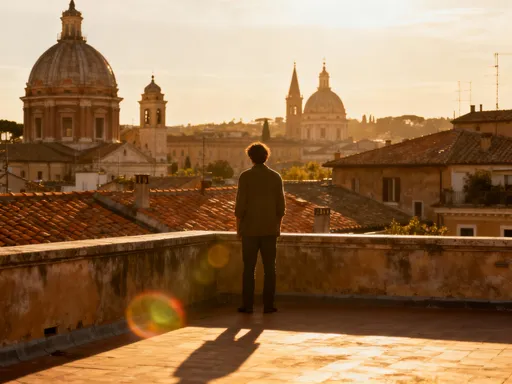
From this vantage, the Tiber River winds below like a ribbon of liquid mercury, reflecting the sky in shifting shades. The Ponte Sisto and Ponte Garibaldi stretch across the water, their arches framing distant glimpses of the Capitoline Hill and the dome of Santa Maria in Trastevere. At sunset, the light transforms the city. The warm glow bathes the rooftops in apricot and rose, casting long, dramatic shadows from church bell towers and campaniles. The air grows still, and for a few golden minutes, the city seems to hold its breath.
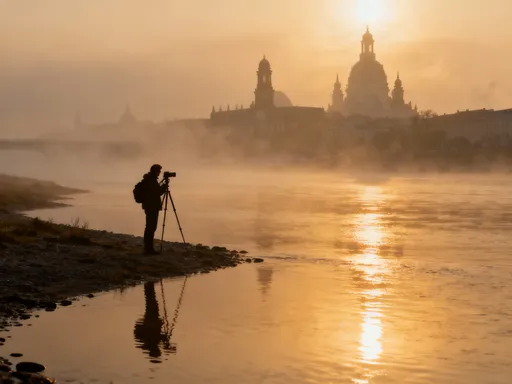
What makes this spot extraordinary is not just the view, but the atmosphere. Unlike the rooftop terraces near Piazza Navona or the Vatican, this place remains untouched by commercial development. There are no overpriced drinks, no crowds jostling for photo space, no loud music. Instead, you might share the space with a local reading a newspaper, a photographer adjusting a tripod, or a couple whispering in Italian. The surrounding buildings show their age proudly—peeling paint, weathered shutters, clotheslines strung between balconies. This is not a preserved facade for tourists; it’s real life, unfolding in real time.
The sense of discovery here is palpable. You feel as though you’ve been let in on a secret, granted temporary membership in a community that values quiet contemplation over spectacle. And because access is not widely advertised, the space retains its serenity. There’s no need to arrive at dawn or wait for off-season crowds to thin. Simply walking up the stairs feels like an act of quiet rebellion against the curated, commodified version of Rome sold in travel brochures. Here, the city reveals itself not as a monument, but as a home.
Janiculum Hill: The Classic with a Twist
Janiculum Hill is no secret in name—many guidebooks mention it as one of Rome’s best panoramic viewpoints. Yet most visitors stop at the main terrace near the Garibaldi monument, where the view stretches across central Rome, from the dome of St. Peter’s to the dome of the Pantheon. While impressive, this central spot often fills with tour groups, especially in the late afternoon. The real magic, however, begins when you walk just 100 meters beyond the main plaza, down a series of narrow, tree-lined footpaths that branch off into quieter, more secluded areas.
Along these lesser-known paths, small stone benches appear at intervals, placed deliberately to face westward. From here, the city unfolds in layers—rooftops cascading down toward the Tiber, church domes rising like islands, and the distant silhouette of the Alban Hills on the horizon. At dawn, the view is particularly moving. The city awakens slowly, with streetlights flickering off one by one and the first buses beginning their routes. The air is crisp, carrying the scent of damp stone and eucalyptus from the hill’s gardens. It’s a moment of stillness before the city’s rhythm accelerates.
Janiculum is unique among Rome’s viewpoints because it feels lived-in. While other panoramic spots are destinations in themselves, Janiculum is part of daily life for many Romans. Elderly couples take morning walks here with their dogs. Students from nearby universities bring sketchbooks to capture the skyline. Local gardeners tend to the flowerbeds and fountains with quiet pride. The daily cannon shot at noon—a tradition since the 19th century—draws a few curious onlookers, but the rest of the day, the hill maintains a gentle, unhurried pace.
This blend of public space and private ritual makes Janiculum more than a viewpoint—it’s a mirror of Roman life. The hill offers not just a visual panorama, but a cultural one. You see how Romans value beauty, history, and tranquility, even in the heart of a bustling capital. By venturing beyond the main terrace, you step into that rhythm. You’re no longer just looking at Rome; you’re moving with it. And in that movement, the city reveals a depth that no photograph can capture.
A Courtyard with a Skyline Peek – The Hidden Garden of Aventine
Nestled in the leafy, residential streets of Aventine Hill, one of Rome’s most peaceful districts, lies a gated convent garden that occasionally opens to the public. Most visitors to Aventine come for the famous keyhole at the Priory of the Knights of Malta, where a perfectly framed view of St. Peter’s dome awaits. But while tourists line up for that single, iconic glimpse, few realize that a deeper, more expansive view lies just above it—in a quiet garden rarely seen by outsiders.
This upper garden, part of a Dominican convent, is accessible only during limited visiting hours, often announced on the gate or through local cultural associations. When the gate creaks open, visitors step into a world of hushed reverence. Cypress trees stand like sentinels along stone pathways. Jasmine climbs ancient walls, filling the air with a delicate fragrance. And from the garden’s elevated edge, partially shaded by olive trees, the entire southern expanse of Rome spreads out below—beyond the Circus Maximus, past the Baths of Caracalla, all the way to the distant Appian Way.
The experience is profoundly intimate. Unlike other panoramic points, this garden does not invite loud exclamations or hurried photos. The silence is broken only by birdsong, the rustle of leaves, and the occasional chime from a nearby church bell. There are no benches, no signage, no vendors. Just a few stone steps where visitors can sit and absorb the view. It feels less like a tourist spot and more like a gift—a moment of grace offered by the city.
What makes this place special is not only the view, but the sense of containment. You’re not standing on an open terrace exposed to the elements; you’re within a protected, sacred space. The garden acts as a frame, focusing your attention not just on the skyline, but on the act of seeing itself. In a world where we’re constantly bombarded with images, this garden teaches the value of stillness, of waiting, of allowing beauty to reveal itself slowly. It’s a reminder that some of the most powerful experiences are not found in grand gestures, but in quiet, unexpected moments.
How to Find These Spots Without Getting Lost
Navigating Rome’s historic center can feel like walking through a labyrinth designed by poets and engineers. Streets twist and turn without warning. Names change between blocks. GPS signals flicker in and out beneath overhanging buildings. But the city reveals itself not through digital precision, but through sensory awareness. Locals navigate by memory, by light, by the sound of footsteps on different surfaces, by the smell of baking bread or river mist. To find Rome’s hidden viewpoints, you must learn to read the city the way Romans do—not as a map, but as a living, breathing organism.
Start with practical tools. Download offline maps before your trip—apps like Maps.me or Google Maps allow you to save areas for use without data. But don’t rely on them exclusively. Watch for subtle clues: a sudden cool breeze might mean you’re near the Tiber. The echo of your footsteps changing from stone to cobblestone could signal an approaching piazza. A cluster of flowerpots on a windowsill or the sound of a cat meowing from a balcony might indicate a residential area less frequented by tourists—often where the best hidden views lie.
Equally important is human connection. Romans are often willing to help, especially if approached with courtesy. A simple “Buongiorno” followed by a polite question in broken Italian—“Scusi, sa dove si trova il giardino sull’Aventino?”—can open doors, sometimes literally. Shopkeepers, bakers, and newsstand vendors often know about local openings, seasonal access, or quiet paths that aren’t on any map. A friendly smile and a willingness to listen can lead you to places no algorithm would suggest.
Also, pay attention to foot traffic. If a narrow alley is filled with delivery scooters and locals carrying grocery bags, it’s likely a throughway used by residents. Follow it, and you might stumble upon a hidden courtyard or an unmarked staircase leading to a rooftop. Conversely, if a street is packed with tour groups and selfie sticks, it’s probably best to turn back and explore another direction. The key is curiosity balanced with respect—wandering with purpose, but never intrusion.
Timing Is Everything: When to Visit for the Best Light
Rome is a city of light, and its character shifts dramatically with the sun. The golden hour—shortly after sunrise and before sunset—transforms the city into a dreamscape. During these times, the low-angle sunlight bathes the stone facades in warm amber, deepens the shadows in alleyways, and sets the rooftops aglow. This is when photography thrives, but also when contemplation feels most natural. The air is soft, the colors rich, and the city seems to slow down.
For the secret rooftop near Trastevere, late afternoon to early evening is ideal. The sun sets behind the Janiculum, casting a golden wash across the river and illuminating the backside of Trastevere’s churches. By 7:30 PM in summer, the light is perfect—warm but not harsh. On the Janiculum Hill, however, dawn offers a more profound experience. Arriving by 6:00 AM in summer allows you to witness the city wake up. The sky shifts from indigo to pale gold, and the first light catches the dome of St. Peter’s like a beacon. Fewer people are around, and the silence is nearly sacred.
The hidden garden on Aventine is best visited in the late morning, between 10:00 and 11:30 AM, when the garden is open and the light filters gently through the trees. At this time, the sun is high enough to illuminate the southern skyline without creating harsh contrasts. Midday light, while often avoided by photographers for its brightness, has its own rewards—it reveals intricate carvings on distant church facades and highlights the texture of ancient brickwork. For those seeking clarity over mood, midday can be revealing.
Seasonal variations also matter. In winter, the sun sets earlier and lower, extending golden hour but shortening daylight. In spring and autumn, the light is balanced—neither too intense nor too weak. Summer brings long days but intense midday sun, so early mornings and late evenings are preferable. By aligning your visits with natural light cycles, you don’t just see Rome more clearly—you feel its rhythm more deeply.
Respecting the City While Chasing Views
The beauty of Rome’s hidden viewpoints lies in their fragility. They remain special because they are not overrun, not commercialized, not turned into photo ops. But this balance is delicate. Every additional visitor changes the atmosphere. Loud voices, litter, or attempts to access restricted areas can erode the trust between locals and travelers. To preserve these spaces, a quiet ethic of respect must guide every visit.
Always stay on public paths. Never climb over walls, enter private courtyards, or ignore “no entry” signs, even if the view seems irresistible. These boundaries exist to protect both the site and the community. If a garden is open only on certain days, do not attempt to enter outside those hours. If a rooftop has a “private” sign, respect it. The most rewarding views are those earned through patience and courtesy, not trespassing.
Leave no trace. Carry out everything you bring in—water bottles, snack wrappers, tissues. Avoid using flash photography in quiet spaces, as it can disturb both people and the mood. Speak softly, especially in religious or residential areas. Remember, you are a guest in a living neighborhood, not an audience in a museum.
Finally, support the local economy. Stop at a nearby café for a coffee or a slice of pizza al taglio. Buy a handmade souvenir from a small artisan. These small acts of kindness help sustain the communities that maintain these spaces. When locals see tourists as respectful contributors rather than fleeting intruders, they are more likely to keep doors open—literally and figuratively. Sustainable tourism is not a slogan; it’s a practice. And in a city as ancient and beloved as Rome, it’s the only way to ensure that future generations can stand in these quiet corners and feel, just for a moment, that they’ve discovered something no one else should see.
Seeing Rome Differently
Finding Rome’s hidden viewpoints is not about collecting vistas or chasing Instagram likes. It’s about shifting your perspective—literally and metaphorically. Each of these quiet overlooks invites you to slow down, to look more closely, to listen. When you stand on a secluded terrace at dawn and watch the city emerge from shadow, or when you sit in a convent garden surrounded by centuries of silence, you’re not just seeing Rome. You’re beginning to understand it.
These moments teach patience. They reward curiosity. They remind us that beauty often lies off the beaten path, in places that require a little effort, a little courage, a little openness to the unknown. And once you’ve experienced Rome this way—through its quiet corners, its hidden gardens, its unguarded moments—you can never go back to seeing it as just a collection of monuments.
The city reveals itself not in grand declarations, but in whispers. In the flutter of laundry. In the chime of a distant bell. In the way the light falls across a rooftop at sunset. These are the details that stay with you, that shape your memory of Rome long after you’ve returned home. And when you close your eyes, it’s not the Colosseum you see first—but that quiet hill, that hidden garden, that rooftop where, for a few perfect minutes, the entire city felt like it was holding its breath, just for you.