Whispers of Nature in a Fairytale City: How to Find Bruges’ Hidden Green Magic
Bruges isn’t just cobbled streets and chocolate shops—trust me, I was surprised too. Behind the postcard-perfect canals and medieval spires, I stumbled upon quiet meadows, misty parks, and secret garden corners no guidebook mentioned. If you think Bruges is all about architecture, wait until you see how nature slips through its historic cracks in the most beautiful ways. Let me show you how to experience a softer, greener side of this Belgian gem. Beyond the gondola rides and lace boutiques lies a quieter rhythm, one shaped by rustling leaves, dew-kissed lawns, and birdsong echoing between ancient walls. This is not a city preserved behind glass—it’s a living, breathing place where history and nature coexist in delicate harmony.
Beyond the Postcard: Rethinking Bruges Through a Natural Lens
When most travelers picture Bruges, they imagine a frozen-in-time cityscape: gabled rooftops reflected in still canals, horse-drawn carriages clattering over cobblestones, and the distant chime of the Belfry marking each hour. While these images are undeniably iconic, they only tell half the story. Bruges is not merely a museum of medieval architecture; it is also a city cradled by green lungs that breathe life into its historic core. The truth is, nature here doesn’t compete with history—it complements it, weaving through the city like ivy on stone.
Take the Minnewater, often called the “Lake of Love,” a serene stretch of water framed by weeping willows and swans gliding silently beneath the trees. This isn’t a manicured park built for tourists—it’s a centuries-old ecological haven where reeds sway in the breeze and kingfishers dart between branches. Similarly, the Beguinage, a UNESCO World Heritage site, is more than its whitewashed houses and quiet courtyard. Step inside during early morning, and you’ll find dappled sunlight filtering through chestnut trees, moss clinging to ancient brickwork, and bees humming among the wildflowers planted along the footpaths.
Even the city’s defensive moat, once a military boundary, has transformed into a ribbon of green that encircles the old town. Today, it supports a surprising variety of plant and bird life, from water lilies blooming in summer to herons stalking the shallows at dawn. These spaces aren’t incidental—they’re integral to Bruges’ identity. Travelers who limit themselves to cathedral tours and chocolate tastings miss the subtle pulse of the city, the quiet hum of life that exists just beyond the main squares. To truly understand Bruges, one must learn to see not only its monuments but also the soft green hands that hold them.
The Secret Power of Seasonal Timing: When Nature Shines in Bruges
One of the most transformative lessons I learned in Bruges is that timing shapes experience—not just in terms of avoiding crowds, but in aligning with nature’s quiet rhythms. Each season unveils a different layer of the city’s green soul, revealing textures, colors, and moods that shift with the light and weather. If you want to witness Bruges at its most poetic, plan your visit around the natural calendar, not just the tourist one.
Spring, particularly from late March to early May, is when the city begins to awaken. Cherry blossoms burst along the canals near the Dampoort, their pale pink clouds trembling in the breeze. The gardens of the Begijnhof come alive with crocuses, daffodils, and tulips planted in soft curves along the pathways. Early risers are rewarded with mist rising off the Minnewater, creating a dreamlike veil that softens the outlines of trees and bridges. This is also the season when swans return to nest, and ducklings follow their mothers in neat rows along the quieter stretches of the Reie River.
By contrast, autumn casts a golden spell over Bruges. From mid-October to late November, the trees lining the city’s parks and waterways turn fiery—maples glow crimson, lindens burn amber, and oaks deepen into rich bronze. The reflections in the canals become more vivid than the trees themselves, doubling the beauty in shimmering ripples. Morning fog returns, but now it carries the earthy scent of fallen leaves. The air feels crisp, and the city slows, as if pausing to admire its own transformation.
Winter, often overlooked, holds its own quiet magic. While snowfall is not guaranteed, even a light frost can transform Bruges into a monochrome dreamscape. The bare branches of willows trace delicate patterns against gray skies, and the frozen edges of the canals sparkle under soft winter light. Fewer visitors mean more solitude in the parks, and the absence of leaves allows for clearer views of architectural details framed by nature. Meanwhile, summer offers lush greenery and longer days, ideal for evening walks when the city cools and the trees rustle with evening insects and birdsong.
Off-the-Beaten-Path Green Escapes: Quiet Parks and Forgotten Trails
While the Market Square draws crowds with its bustling cafes and towering spire, true serenity lies just a short walk away—often within five minutes of the main attractions. These hidden green escapes aren’t marked on every map, but they offer moments of peace, connection, and unexpected beauty. For travelers seeking stillness, they are essential.
Maria-Christina Park, tucked behind the railway station, is one such sanctuary. Unlike the more famous parks, it remains largely undiscovered by tourists. Wide lawns slope gently toward a small pond where ducks gather, and tall beech trees form a canopy that filters sunlight into soft pools on the ground. Benches are spaced far apart, encouraging quiet reflection. In spring, the park’s magnolia tree blooms spectacularly, its large pink flowers standing out against the fresh green leaves. It’s the kind of place where you can sit with a book, listen to the wind, and forget you’re in a city at all.
Equally peaceful are the overgrown edges of the old city moats, particularly along the northern stretch near the Gentpoort. Here, the stone fortifications are softened by ivy, moss, and ferns that thrive in the damp shade. Reeds grow tall along the water’s edge, and dragonflies hover above the surface. A narrow footpath winds through this forgotten corridor, offering views of houseboats tucked beneath willow branches and the occasional kingfisher diving for fish. It’s a place of quiet mystery, where history and nature blur.
Further afield, the woodlands near Assebroek offer a different kind of retreat. This area, just a ten-minute bike ride from the city center, feels like stepping into the countryside. Winding trails pass through mixed forests of oak, hornbeam, and birch, with wild garlic carpeting the ground in spring and mushrooms sprouting after autumn rains. Birdwatchers might spot woodpeckers, nuthatches, or even the elusive tawny owl. These spaces remind us that Bruges is not an isolated island of stone—it’s part of a larger, living landscape.
Canals with a Natural Touch: Where Water Meets Wild
Bruges is famous for its canals, but most visitors see only the polished, picture-perfect sections—those with clean stone banks, neat houseboats, and postcard views of the Belfry. Yet, if you venture beyond the center, you’ll find stretches where the city’s waterways revert to something wilder, where nature reclaims its space. These are the places where the soul of Bruges truly flows.
The Groeninge Canal, especially near the edge of the museum district, offers one of the most striking examples. Here, the banks are less maintained, allowing reeds and tall grasses to grow freely. Willow trees lean over the water, their trailing branches brushing the surface like fingers. Ducks and moorhens nest in the thickets, and in early summer, white water lilies bloom in quiet corners. The reflections in the water are less about symmetry and more about texture—the ripple of wind, the blur of green, the sudden splash of a fish breaking the surface.
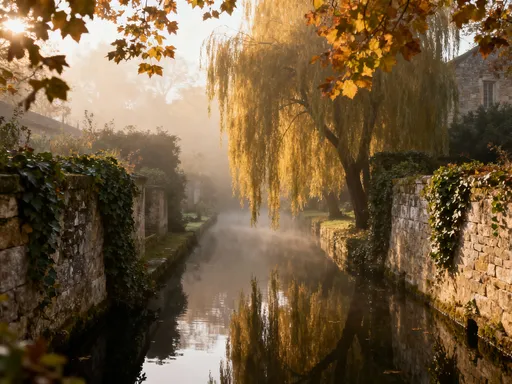
Another hidden gem lies along the quieter loops near Sint-Janshospitaal, the site of Europe’s oldest operating hospital. The canal here winds through a shaded corridor, flanked by ancient trees and ivy-covered walls. Because this area sees fewer tourists, the atmosphere is hushed. You might hear the soft cooing of pigeons, the rustle of a squirrel in the underbrush, or the distant call of a heron. The water moves slowly, almost imperceptibly, creating a mirror that captures not just buildings, but the shifting sky and the dance of leaves above.
These naturalized sections of the canals serve an important ecological function. They act as green corridors, allowing birds, insects, and small mammals to move through the city safely. They also improve water quality and provide cooling in summer. But beyond their environmental value, they offer something equally vital: a sense of intimacy. Unlike the wide, open canals in the center, these narrower, greener passages feel personal, like secret pathways known only to those who take the time to look.
Walking with Purpose: Choosing Routes That Reveal Nature Gradually
Not all walking tours are created equal. Many itineraries focus on ticking off landmarks—cathedral, belfry, market square—in rapid succession. But this approach often misses the subtle beauty that unfolds only when you slow down. To truly experience Bruges’ green magic, you must walk with intention, choosing routes that allow nature to reveal itself gradually, like a story unfolding with each step.
One of the most rewarding walks begins at Minnewater Lake. Start early, when the mist still hovers over the water and the swans are most active. From there, follow the path along the Reie River toward the Beguinage. Notice how the trees change—first willows, then chestnuts, then lindens—their leaves filtering the light in different patterns. Watch for moss growing in the cracks of ancient walls, for spiders’ webs jeweled with dew, for the way ivy climbs in spirals around stone pillars.
As you enter the Beguinage, pause. The courtyard may be small, but it’s rich with detail. The garden is planted not for show, but for tranquility—low hedges, simple flowers, and a central statue surrounded by grass. Sit on a bench and simply observe. How many birds can you hear? How does the light shift over ten minutes? This is not a place to rush through, but to inhabit.
From there, continue toward the Dampoort, where the city walls open into a green corridor. The path follows the old moat, now lined with wildflowers and tall grasses. You’ll pass under arching trees, cross small footbridges, and catch glimpses of houseboats tucked into hidden inlets. The pace should be slow—no more than a mile or two per hour. This kind of walking isn’t about distance; it’s about attention. It’s about training your eyes to see what’s always been there but often overlooked.
Photographing the Unseen: Capturing Bruges’ Natural Soul
Great photography in Bruges doesn’t require a professional camera or perfect weather. What it does require is a shift in perspective—learning to see beyond the obvious landmarks and capturing the quiet moments where nature and history intertwine. Some of the most moving images I’ve taken were of moss on a brick wall, a single leaf floating on a puddle, or the reflection of a spire broken by ripples in the canal.
Morning light is your greatest ally. Between 7 and 9 a.m., the sun casts a soft, golden glow along the tree-lined alleys, creating long shadows and warm highlights. This is the best time to photograph the Begijnhof garden, when the dew is still on the grass and the light filters through the trees in delicate beams. A simple smartphone camera, held steady, can capture this magic—just avoid using flash, which flattens texture and destroys atmosphere.
Rain, often seen as a travel inconvenience, can actually enhance your photos. After a shower, the city glistens. Puddles become mirrors, reflecting the sky and architecture in abstract patterns. Cobblestones darken, making colors more vivid. And the air clears, offering sharper views of distant spires. Don’t retreat indoors—pull up your hood and walk slowly. Some of my most evocative shots were taken on drizzly mornings, when few others were outside.
Equally important is ethical awareness. These green spaces are fragile. Avoid stepping on protected grass, disturbing nesting birds, or picking flowers. Many of the plants in the Beguinage and city parks are part of conservation efforts. Respect the rules, keep your distance, and use your zoom instead of getting too close. True beauty doesn’t need to be touched—it only needs to be seen.
Bringing Nature Home: How This Experience Changes Your Travel Mindset
Discovering the green heart of Bruges doesn’t just change how you see this city—it changes how you travel, full stop. Once you’ve learned to notice moss on stone, the sound of birds in a courtyard, or the way light dances on water, you begin to see these details everywhere. You start to expect them. You realize that no city, no matter how historic or urban, is ever truly separate from nature. It’s always there, waiting to be noticed.
This shift in mindset brings a deeper kind of satisfaction. Instead of racing from site to site, you move with curiosity and calm. You choose walks over tours, silence over noise, observation over consumption. You begin to value stillness as much as sightseeing. And you carry this quiet awareness home with you—applying it to your own neighborhood parks, your daily walks, even your garden.
Bruges teaches us that beauty isn’t always loud or grand. Sometimes, it’s the soft green shoot pushing through a crack in the pavement, the whisper of leaves in the wind, the swan gliding silently under a stone bridge. These moments don’t demand attention—they invite it. And in a world that often feels rushed and overwhelming, they offer something rare: a chance to breathe, to pause, to reconnect.
So the next time you plan a trip—whether to a medieval city, a coastal town, or a mountain village—ask yourself: where does nature live here? How does it shape the place? What quiet corners might be hiding in plain sight? Because even in the most storied cities, nature always finds a way to bloom. And when you learn to see it, you don’t just visit a destination—you truly arrive.