Wandering Through Fire and Rhythm: Bilbao’s Festivals Like You’ve Never Seen
Have you ever felt the ground shake beneath drumbeats at dawn? Or joined strangers dancing in the street as fireworks paint the sky? I didn’t expect Bilbao’s festivals to hit me this hard—raw, joyful, and deeply human. Far from just a steel-and-museum city, it transforms during celebrations into a living stage of Basque soul. Let me take you through its pulsing heart. This is not tourism as performance; it’s participation in something real, where rhythm, fire, and community converge in nine days of uncontainable energy. To understand Bilbao, you don’t just walk its streets—you dance down them.
The Spirit of Bilbao: More Than Just a Guggenheim City
Bilbao is often introduced through its architectural renaissance—the shimmering titanium curves of the Guggenheim Museum, the sleek Zubizuri bridge, the revitalized waterfront. These landmarks tell part of the story: a post-industrial city reborn. But they don’t capture its heartbeat. That pulse is felt in the narrow streets of Casco Viejo during festival season, where laughter echoes off centuries-old stone, and neighbors spill out of bars to dance under string lights. The true transformation of Bilbao isn’t in steel or glass—it’s in its people, and their unwavering commitment to collective joy.
Festivals peel back the polished surface of modern Bilbao to reveal the enduring Basque spirit beneath. This is a culture rooted in resilience, pride, and deep community bonds. While museums house art, the festivals are where culture lives—unscripted, evolving, and deeply inclusive. Unlike curated exhibitions, these events invite participation. You don’t observe them from a distance; you are welcomed into them. Locals, often reserved in daily life, open up during celebrations, offering food, rhythm, and conversation with genuine warmth. It’s this human connection that turns a visit into a memory.
Experiencing Bilbao through its festivals offers a depth that sightseeing alone cannot match. Walking through the Guggenheim is inspiring, but dancing in Abando with a stranger who hands you a glass of cider is transformative. These moments dissolve the boundary between visitor and local. The city becomes not just a destination, but a shared experience. In a world where travel often feels transactional, Bilbao’s festivals restore a sense of belonging. They remind us that place is not just defined by geography, but by the people who celebrate it together.
Avenida de Abando: The Pulse of the Party
If Bilbao’s festivals have a central artery, it is Avenida de Abando. Wide enough to accommodate thousands, yet intimate enough to feel personal, this grand boulevard becomes the city’s main stage during Aste Nagusia, the Great Week. By day, it’s a thoroughfare for shoppers and commuters. But when the festival begins, it transforms. Street vendors set up stalls selling roasted chestnuts, cotton candy, and Basque flags. Musicians tune their instruments on makeshift platforms. Children balance on parents’ shoulders, eyes wide with anticipation. The air hums with excitement, thick with the scent of grilled onions and damp pavement after an early rain.
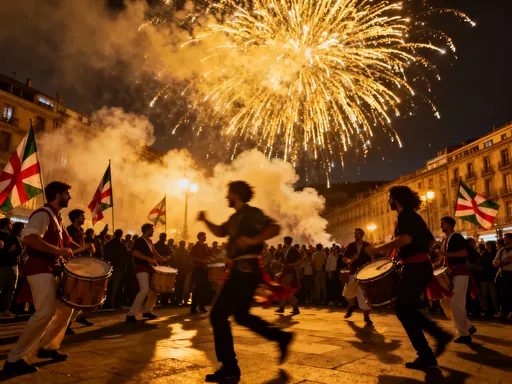
At night, the avenue ignites. Strings of colored lights stretch overhead, and the crowd swells as locals pour in from surrounding neighborhoods. The rhythm of drumming groups echoes against the façades of grand buildings, creating a sound that feels both ancient and electric. Spontaneous dancing breaks out near the Arriaga Theatre, where couples sway to live bands playing traditional melodies with modern beats. This is not a performance for tourists—it’s a ritual for the people of Bilbao, and visitors are invited to join, not watch.
What makes Avenida de Abando so effective as a festival space is its thoughtful urban design. Wide sidewalks, open plazas, and excellent public transport access allow for large gatherings without chaos. The city plans meticulously—temporary stages, medical tents, and waste stations are seamlessly integrated. Yet, despite the scale, the atmosphere remains walkable and human-scaled. You can step off the main drag into quieter side streets and find small gatherings, impromptu music, or a family grilling sardines in a courtyard. This balance of grandeur and intimacy is key to the festival’s magic.
Moreover, the avenue symbolizes Bilbao’s evolution. Once lined with factories and freight rails, it now hosts artists, musicians, and thousands celebrating life. The transformation mirrors the city’s journey—from smoke and steel to song and solidarity. Walking down Abando during Aste Nagusia isn’t just attending a party; it’s witnessing a community reclaiming its public space, not for commerce or transit, but for connection and joy.
Aste Nagusia: Nine Days of Pure Basque Energy
No event captures the spirit of Bilbao like Aste Nagusia, the city’s largest annual festival. Lasting nine days in late August, it is a full-throated celebration of Basque identity, creativity, and communal resilience. What began in 1978 as a modest effort to revive local culture has grown into a phenomenon that draws over half a million people. Yet, despite its size, it retains an authentic, grassroots feel. This is not a corporate-sponsored spectacle; it is organized by the city and sustained by neighborhood associations, volunteer groups, and generations of families who return year after year.
The festival opens with the txupinazo—a massive firework launched from a platform in Abandoibarra. At exactly midnight, the sky erupts in color, and the crowd roars. This single moment signals the official start, and from then on, the city does not stop moving. Each day has a theme—music, dance, sports, children’s activities—but the rhythm remains constant: celebration from morning to night. Morning brings drumming groups practicing in the streets; afternoon hosts concerts in parks; evening delivers fireworks, dancing, and communal meals.
One of Aste Nagusia’s most powerful features is its inclusivity. There are no VIP sections or ticketed enclosures. Everyone shares the same space, the same music, the same food. Children ride on parents’ shoulders, elders sit on benches smiling, teenagers dance in circles. The festival belongs to the people. This egalitarian spirit reflects deep Basque values—community, equality, and pride in local identity. It’s not about status or display; it’s about being together.
Another defining element is the txosnas—private festival tents run by local associations. These are not open to the public by default, but many welcome visitors with a smile and a pour of cider. Inside, long wooden tables are covered in pintxos, and music plays until dawn. To be invited into a txosna is a rare honor, a sign that you’re not just passing through, but momentarily part of the fabric of Bilbao life. These spaces are where the festival’s soul truly lives—warm, noisy, and full of laughter.
Street Saints and Fire: The Role of Tradition in Modern Festivities
Beneath the fireworks and drumming lies a deeper current—tradition. Bilbao’s festivals are not invented for tourism; they grow from centuries-old roots. Many celebrations are tied to religious feasts, though their expression today is often more cultural than devotional. The feast of San Antón in January, for example, honors the patron saint of animals with a torchlit parade and bonfires. Locals bring their pets to the church of San Antón for blessings, then gather around fires, sharing cider and stories. The solemnity of the blessing contrasts with the joy of the gathering, showing how ritual and revelry coexist.
Similarly, the Virgin of Begoña, patroness of the Basque people, is honored each September with a pilgrimage and procession. Thousands walk from Bilbao to the Sanctuary of Begoña, some on foot, others by bus, all carrying flowers. The mood is reverent, but not somber. Along the route, people greet old friends, children run ahead, and music plays from portable speakers. At the sanctuary, hymns are sung, but afterward, families picnic in the hills, turning devotion into celebration.
These religious frameworks provide structure, but the energy comes from living traditions—drumming groups like the zurrikrak, who wear red sashes and beat rhythms that echo through the streets; girostas, towering papier-mâché figures paraded through crowds; and cider house rituals, where people stand in line to pour cider from height into their glasses. These practices are not preserved in museums—they are practiced, adapted, and passed down. A teenager learning to drum with a zurrikrak group is not performing history; they are living it.
The use of fire is especially symbolic. Bonfires, torches, and fireworks are not just for spectacle—they represent purification, light in darkness, and communal warmth. In winter festivals, flames ward off the cold; in summer, they mark the peak of energy. Fire brings people together, literally and figuratively. It’s no accident that so many Basque celebrations center around it. In a region shaped by mountains, sea, and weather, fire remains a primal force of unity.
Flavors That Fuel the Fest: Eating and Drinking Like a Local
No festival in Bilbao is complete without food—and not just the famous pintxos. During Aste Nagusia, the city becomes a moving feast. Street stalls offer roasted red peppers stuffed with tuna, grilled sardines on wooden skewers, and marmitako, a rich tuna and potato stew traditionally cooked on fishing boats. These dishes are simple, hearty, and deeply satisfying—meant to fuel long nights of dancing and drumming.
Eating during the festival is inherently social. Meals are shared on blankets in parks, at long tables in txosnas, or standing on the sidewalk with a paper plate. There is no formality, no need for reservations. A family might invite you to join their picnic; a group of friends might hand you a skewer of grilled chorizo. This generosity is not performative—it’s cultural. In Basque tradition, sharing food is an act of trust and welcome.
Drinks are equally central. Cider, or sagardoa, flows freely. In traditional cider houses, diners stand at long counters while someone pours from a barrel high above, allowing the cider to aerate as it falls. This ritual is replicated in festival txosnas, where volunteers take turns pouring for the group. The sharp, tangy drink cuts through rich foods and warms the body in the night air. Another favorite is patxaran, a liqueur made from sloe berries soaked in anisette. Sweet and slightly herbal, it’s often shared in small glasses at the end of the night, a toast to friendship and the day’s joy.
The taste of a festival lingers long after it ends. For many locals, the smell of roasting peppers or the fizz of fresh cider instantly brings back memories of childhood celebrations. These flavors are not just sustenance—they are emotional anchors. When you eat like a local during Aste Nagusia, you’re not just tasting food; you’re absorbing a culture’s rhythm, its pace, its priorities. You learn that in Bilbao, joy is not rushed—it’s savored, shared, and passed around the table.
Hidden Rhythms: Offbeat Celebrations Beyond the Main Event
While Aste Nagusia dominates the calendar, Bilbao’s festive spirit doesn’t end there. Smaller, quieter celebrations offer a different kind of intimacy. Neighborhood fiestas, held in districts like Deusto, Begoña, or Iralabarri, are organized by local associations and often fly under the tourist radar. These events feature live music, children’s games, and communal barbecues. There’s no grand stage, no fireworks—but there is authenticity. You might find a grandmother teaching kids to dance the aurresku, or a local band playing folk songs passed down for generations.
Winter brings its own magic. The solstice lights along the Nervión River transform the city into a glowing corridor of color. Bridges and buildings are draped in shimmering displays, and families stroll along the promenade, sipping hot chocolate. In December, the Christmas market in Plaza Nueva offers handmade crafts, roasted chestnuts, and carol singing. These moments are slower, gentler, but no less meaningful. They show that Bilbao’s celebration isn’t just about energy—it’s about light in the dark, warmth in the cold.
Then there are the unexpected moments: a dawn choir singing on a ferry crossing the river, a boat parade during the Begoña festivities, or a spontaneous drum circle in a park. These are not advertised in guidebooks, but they are where the city’s soul shines brightest. They remind us that celebration doesn’t require a schedule or a permit—it arises naturally when people come together with joy in their hearts.
For travelers, these offbeat moments offer a chance to linger beyond the crowds. Staying a few days after Aste Nagusia ends, or visiting in the shoulder seasons, allows for deeper connection. You’re more likely to be invited into a home, to share a meal, to learn a few words of Euskara, the Basque language. These quiet rhythms don’t shout—but they resonate.
Planning Your Festival Journey: When, Where, and How to Immerse
Timing is everything. Aste Nagusia takes place in late August, typically beginning on the first Saturday after August 15. For the full experience, arrive a day early to settle in and soak up the pre-festival buzz. Accommodation books up months in advance, so plan early. Staying in the Abando or Casco Viejo districts puts you within walking distance of the main events. Hotels range from boutique stays to larger chains, but consider renting a room through trusted platforms for a more local feel.
Public transport is reliable and expanded during the festival. Bilbao’s metro, recognizable by its sleek Foster + Partners design, runs frequently, and extra buses are added to handle crowds. The tram line along the river also connects key areas. If you’re staying nearby, walking is often the best option—festivals are spread across a compact area, and every turn reveals something new.
Participation is encouraged, but respect matters. Dress comfortably—layers are ideal, as nights can be cool. While there’s no strict dress code, locals tend to dress casually but neatly. When taking photos, especially during religious processions or in txosnas, ask permission. These are private moments, even when public. If someone invites you to dance, say yes. If offered food, accept with gratitude. These small gestures build bridges.
Preparation enhances spontaneity. Download a festival map, check the daily program, and note key events like the txupinazo or the final fireworks. But leave room for the unexpected. Some of the best memories happen off the schedule—a chance encounter, a shared song, a quiet moment by the river. Let the city guide you. Bring comfortable shoes, a reusable water bottle, and an open heart. And don’t worry if you don’t speak Euskara or Spanish—smiles and enthusiasm are universal.
Conclusion: Why Festivals Are the Soul of the City
Bilbao’s festivals are not add-ons to the travel itinerary—they are the heart of the city’s identity. They reveal a truth that architecture and museums can only hint at: that culture is not static, but lived. It is in the drumbeat, the shared meal, the spontaneous dance. These celebrations are acts of resilience, joy, and continuity—a way for the Basque people to say, “We are here, we are together, and we are alive.”
To visit Bilbao during festival season is to move beyond passive observation. It is to step into rhythm, to let the music move you, to accept a glass of cider from a stranger and feel, for a moment, like you belong. In a world that often feels fragmented, these festivals offer a model of community—vibrant, inclusive, and unapologetically joyful.
So come not just to see Bilbao, but to feel it. Let the firelight warm your face, the drums shake your chest, the laughter of children guide your steps. Let go of the need to document everything and instead, be present. Because the true magic of a festival isn’t in the spectacle—it’s in the connection. And in Bilbao, that connection is always within reach, waiting in the next song, the next shared smile, the next step into the dance.