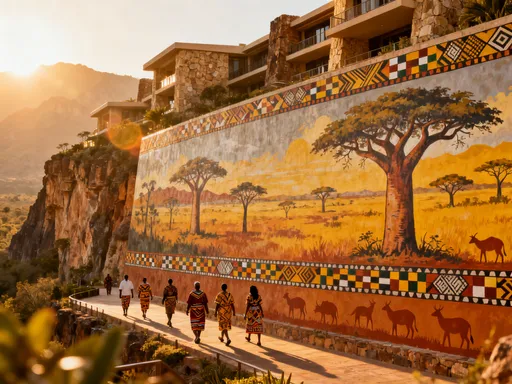
Whispers of Art in the Alpine Air: Vaduz Reimagined
Nestled in the heart of the Alps, Vaduz isn’t just the capital of Liechtenstein—it’s a living canvas. I never expected a city so small to pulse with artistic energy, where mountain views meet modern sculpture and centuries-old architecture frames contemporary expression. This is more than sightseeing; it’s an immersive dialogue between landscape, light, and creativity. You don’t just walk through Vaduz—you feel it. The crisp alpine air carries a hush that sharpens the senses, and every turn reveals a quiet harmony between nature and human imagination. In a world where travel often means crowds and checklists, Vaduz offers something rare: a place where art isn’t confined to galleries but breathes through the streets, hillsides, and skyline.
The First Glimpse: Arriving in a Mountain-Painted City
Approaching Vaduz by car or train from neighboring Switzerland or Austria, the first impression is one of gentle emergence. The city does not rise abruptly from the plains but unfolds gradually, cradled between the Rhine Valley and the steep, forested slopes of the eastern Alps. Its compact silhouette blends into the terrain like a natural extension of the landscape. There are no sprawling suburbs or towering skyscrapers—only a careful arrangement of stone buildings, tiled roofs, and narrow streets that follow the contours of the land. The journey into Vaduz feels less like entering a capital and more like stepping into a private moment between mountains and memory.
This seamless integration with nature sets the tone for the entire experience. Unlike bustling urban centers where architecture competes with environment, Vaduz listens to its surroundings. The rhythm of life here is shaped by elevation, weather, and light. Mornings often begin with a soft mist clinging to the hills, gradually lifting to reveal the distant snowcaps of the Rätikon range. Afternoons bring golden sunlight that slants across rooftops and gilds the river’s edge. Evenings are marked by a deepening blue that settles over the valley, quiet and undisturbed. This natural cadence becomes the first brushstroke in Vaduz’s artistic identity—subtle, intentional, and deeply felt.
One of the most striking aspects of arriving in Vaduz is the absence of noise and congestion. There are no long queues at tourist sites, no blaring horns, no overwhelming crowds jostling for photos. Instead, visitors are greeted with space—room to breathe, to pause, to take in the view without distraction. This tranquility is not accidental; it is part of what makes the city’s cultural offerings so powerful. When art exists in silence, it speaks louder. The lack of sensory overload allows travelers to engage more fully with their surroundings, noticing details they might otherwise miss: the curve of a wrought-iron railing, the texture of weathered stone, the way shadows fall across a public square at midday.
For many, the initial view of Vaduz includes a glimpse of the Prince’s Castle perched high on a hillside, its turrets rising above the treeline. Though not open to the public, the castle serves as a silent guardian of the city’s heritage, a symbol of continuity amidst change. From below, it appears almost suspended in air, connected more to the sky than to the ground. This ethereal quality—of being both present and distant—mirrors the city’s overall character. Vaduz does not shout its significance. It whispers it, inviting those who come to listen closely, to move slowly, and to discover art not as spectacle, but as presence.
Sculpture as Cityscape: Public Art Along the Stroll
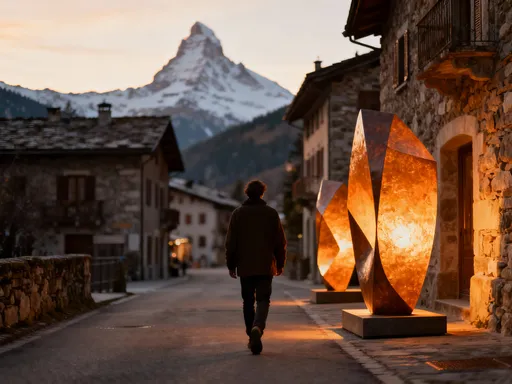
From the moment you step into the center of Vaduz, art becomes part of the city’s infrastructure. Sculptures do not stand apart as isolated monuments but are woven into the daily fabric of life. Along Städtle, the main pedestrian thoroughfare, abstract forms rise beside flower beds and benches. A polished steel figure reflects the shifting clouds; a cluster of geometric shapes invites touch and exploration. These works are not cordoned off or labeled with lengthy plaques—they simply exist, unobtrusive yet undeniable, like natural features shaped by time and intention.
What makes Vaduz’s public art so effective is its integration. Benches are not merely functional—they are designed as sculptural pieces, their curves echoing organic forms or modernist lines. Lamp posts, railings, and even drainage grates carry subtle design elements that suggest a cohesive aesthetic vision. Even the paving stones in certain plazas are arranged in patterns that draw the eye and slow the pace of movement. This attention to detail transforms an ordinary walk into a curated experience, where every step reveals a new layer of creative thought.
The city’s commitment to open-air art extends beyond decorative flourishes. Temporary installations appear seasonally, often responding to themes of nature, identity, or perception. Some are interactive, encouraging visitors to step inside, look through, or move around them to see how perspective shifts. Others play with light and shadow, changing appearance depending on the time of day. This dynamic quality ensures that no two visits feel exactly the same. A sculpture that seems solid and imposing in morning light may appear delicate and translucent in the late afternoon sun.
Equally important is the way public art in Vaduz avoids elitism. It is not reserved for museums or private collections but belongs to everyone. Children climb on abstract forms without fear of reprimand. Locals pass by familiar pieces with quiet familiarity, as if greeting old friends. Tourists pause, photograph, and speculate—sometimes correctly, sometimes not—about meaning and intent. But interpretation is not required. The power of these works lies not in what they represent, but in how they make people feel: curious, contemplative, connected. In this small capital, art is not something to be studied from a distance—it is lived, touched, and shared.
Kunstmuseum Vaduz: The Heartbeat of Liechtenstein’s Art Scene
At the heart of Vaduz’s artistic identity stands the Kunstmuseum, a striking black-clad structure that anchors the city’s cultural landscape. Its modern façade, composed of dark basalt and glass, contrasts deliberately with the surrounding historic buildings, yet it does not dominate. Instead, it asserts a quiet confidence, signaling that tradition and innovation can coexist. The museum’s exterior reflects the alpine sky and the movements of passersby, creating a dynamic interplay between inside and outside, permanence and change.
Inside, the Kunstmuseum houses an internationally recognized collection of modern and contemporary art, with a particular emphasis on post-1945 European and American works. While it does not aim to replicate the vast holdings of larger institutions, its strength lies in curation and focus. Rotating exhibitions explore specific movements, artists, or themes, often drawing from the Prince of Liechtenstein’s extensive private collection. This unique access allows the museum to present rare and significant works that might otherwise remain unseen by the public.
One of the museum’s defining characteristics is its ability to connect local context with global conversations. Exhibitions frequently examine how international artistic trends intersect with Liechtenstein’s cultural identity, history, and geography. A show on minimalism might include works inspired by alpine silence; a survey of conceptual art could explore themes of sovereignty and visibility. These thoughtful pairings deepen the visitor’s understanding, transforming the museum from a repository of objects into a space of dialogue.
The Kunstmuseum also plays a vital educational role, offering guided tours, lectures, and workshops for adults and children alike. School groups are common, and families often spend hours moving through the galleries, discussing what they see. The museum’s layout encourages exploration, with open sightlines between floors and carefully modulated lighting that enhances rather than overwhelms. There are no overcrowded rooms or timed entries—just a steady, unhurried flow of discovery.
Perhaps most importantly, the Kunstmuseum embodies Vaduz’s broader philosophy: that culture should be accessible, meaningful, and integrated into everyday life. It does not seek to impress through scale or spectacle but through depth and resonance. Visitors leave not with a checklist of famous names, but with a lingering sense of having been part of something thoughtful and enduring.
Architecture as Expression: Where Old Meets Bold
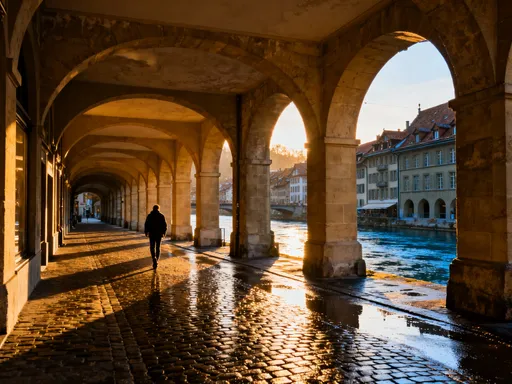
Walking through Vaduz is like moving through a three-dimensional collage of time. The city’s architectural language is one of respectful contrast—historic structures stand shoulder-to-shoulder with contemporary designs, not in competition, but in conversation. The Old Town, with its narrow lanes and centuries-old buildings, retains a medieval charm. Stone facades bear the marks of weather and use; wooden shutters frame small windows; flower boxes overflow with seasonal blooms. These buildings speak of continuity, of families and trades passed down through generations.
Yet just steps away, bold modern interventions assert themselves. The Parliament building, completed in the early 21st century, features clean lines, glass walls, and a gently curved roof that echoes the surrounding hills. Its transparency is both literal and symbolic—inviting public oversight while maintaining dignity. Similarly, new residential and commercial developments incorporate sustainable materials and innovative forms without disrupting the city’s scale. Flat roofs, large windows, and muted color palettes ensure that modernity enhances rather than overwhelms.
This architectural dialogue is not accidental. Urban planning in Vaduz prioritizes harmony and intentionality. New constructions undergo rigorous review to ensure they respect sightlines, materials, and proportions. The result is a cityscape that feels coherent despite its stylistic diversity. A 17th-century chapel might sit across from a minimalist gallery, yet the transition feels natural, even inevitable. The contrast itself becomes a form of artistry—a visual representation of how tradition and progress can inform one another.
Religious architecture adds another layer to this narrative. St. Florin Church, with its neogothic spire and quiet courtyard, serves as both a place of worship and a community landmark. Its interior, though modest, is rich in detail—carved wood, stained glass, and soft acoustics that invite reflection. Nearby, contemporary chapels or meditation spaces offer alternative forms of spiritual expression, often incorporating natural materials and open designs that connect interior and exterior. Together, these structures reflect a society that values both heritage and evolution, rootedness and openness.
Art in Motion: Walking the Vaduz Trail with Intention
To fully experience Vaduz’s artistic spirit, one must walk—not hurriedly, but with intention. A suggested route begins at the banks of the Rhine River, where a footbridge connects Liechtenstein with Switzerland. From here, the path follows the water’s edge, offering views of rippling currents and riverside vegetation. Benches along the way invite pauses, and small interpretive signs highlight local flora and fauna, reinforcing the connection between art and ecology.
From the river, the trail ascends gently toward the city center. Public sculptures appear at regular intervals, each placed to interact with its surroundings. One stands at the edge of a meadow, its reflective surface mirroring the sky; another is nestled among trees, visible only when approached from a certain angle. These placements encourage mindfulness—travelers must slow down, look closely, and consider perspective.
Reaching Städtle, the route passes the Kunstmuseum and continues toward the base of the hill where the Prince’s Castle looms above. Though the castle itself is not accessible, a marked path leads to an observation platform that offers panoramic views of the city, the valley, and the distant Alps. This vantage point is more than scenic—it is symbolic. From here, one can see how art, architecture, and nature are interwoven across the landscape. The city appears not as a collection of buildings, but as a unified composition.
Practical considerations enhance the experience. Comfortable walking shoes are recommended, as some paths are cobbled or slightly inclined. Mornings and late afternoons offer the best light for photography and reflection. Spring and early autumn provide mild temperatures and fewer visitors, allowing for deeper immersion. Travelers are encouraged to carry water, a light jacket, and perhaps a notebook to record impressions. The goal is not to cover ground quickly, but to absorb the rhythm of the place—to let the mountain air, the quiet streets, and the subtle presence of art shape the journey.
Beyond the Center: Hidden Creative Corners Off the Beaten Path
While the city center draws most attention, Vaduz’s artistic soul also thrives in quieter, less-trafficked spaces. A short detour from Städtle leads to narrow alleys where family-run craft shops display handmade ceramics, textiles, and woodwork. These are not souvenir stalls, but studios where artisans work with care and tradition. Some offer demonstrations; others welcome quiet observation. The pieces for sale are often one-of-a-kind, bearing the marks of the maker’s hand.
Seasonal exhibitions in small galleries or community centers provide another window into local creativity. These shows feature emerging artists, experimental works, or thematic projects that reflect current concerns—environmental change, cultural memory, personal identity. Without the pressure of commercial galleries or international markets, these spaces foster authenticity and risk-taking. Visitors may stumble upon a poetry reading, a live sketching session, or a pop-up installation in an abandoned storefront.
Even the city’s signage and public information boards reflect a design sensibility. Maps are clear and elegant; directional markers use simple typography and intuitive symbols. This attention to usability and beauty underscores a broader commitment to thoughtful living. In Vaduz, even the smallest details are considered—not for show, but because they matter.
These grassroots expressions of artistry balance the more formal offerings of the Kunstmuseum and public sculptures. They remind visitors that culture is not only curated by institutions, but lived by individuals. To engage with these spaces is to witness the human scale of creativity—the quiet pride of a potter shaping clay, the concentration of a painter adjusting color, the joy of a child discovering a hidden mural in an alleyway.
Why Vaduz? The Quiet Power of Small-Scale Cultural Immersion
In an age of overtourism and cultural saturation, Vaduz stands as a quiet alternative. It does not compete with larger capitals through size or spectacle. Instead, it offers depth through intimacy, richness through restraint. Here, cultural immersion is not measured by the number of sites visited, but by the quality of attention paid. A single afternoon in Vaduz can yield more meaningful encounters than a week in a crowded metropolis.
The city proves that artistic vitality does not require grand institutions or massive budgets. It grows from intention—from a collective decision to weave creativity into the fabric of daily life. Public spaces become galleries. Buildings become statements. Nature becomes context. Every choice, from paving stones to sculpture placement, reflects a vision of what a city can be: not just functional, but beautiful; not just inhabited, but felt.
Travelers who come seeking only landmarks may leave underwhelmed. But those who arrive with openness and curiosity discover something more enduring. Vaduz invites slowness. It rewards presence. It asks not for admiration, but for participation. To walk its streets is to become part of an ongoing artwork—one shaped by mountains, memory, and the quiet persistence of human expression.
When a City Becomes a Canvas
Vaduz does not announce itself as an art capital. It does not need to. Its galleries, sculptures, and architectural contrasts speak for themselves, but softly, like whispers on the wind. The true power of this alpine city lies in its ability to transform urban space into an evolving artwork—one where nature, design, and human spirit converge. Here, art is not something to be consumed, but something to be experienced in the breath of the mountains, the texture of the streets, the silence between sounds.
To visit Vaduz is to embrace a different kind of travel—one rooted in mindfulness, connection, and sensory awareness. It is an invitation to slow down, to look closely, and to feel the rhythm of a place shaped by intention and care. In a world that often values speed and scale, Vaduz reminds us that beauty and meaning can be found in the small, the quiet, and the deeply considered. Come not as a tourist, but as a witness—to art, to landscape, and to the quiet, mountain-held beauty of a city that has learned to listen.