What I Discovered Walking Through Luanda’s Forgotten Colonial Streets
You know that feeling when a city’s walls start telling stories? That’s Luanda. I arrived curious, but what I found—colonial facades cracked by time, modernist skeletons rising from red soil, Afro-Portuguese rhythms in every beam and brick—blew my mind. This isn’t just architecture; it’s memory in concrete and stone. In a city rebuilding its identity, every building whispers what was and shouts what’s next. Let me take you where guidebooks don’t go—into the soul of Luanda’s streets.
First Impressions: The Architectural Pulse of Luanda
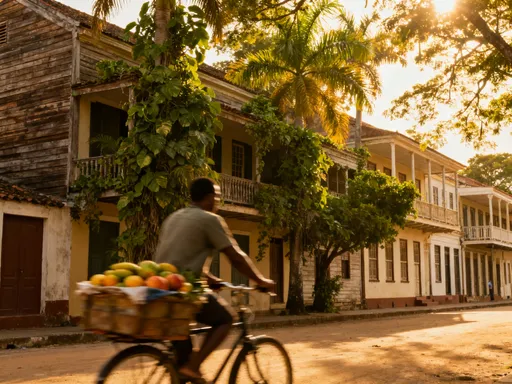
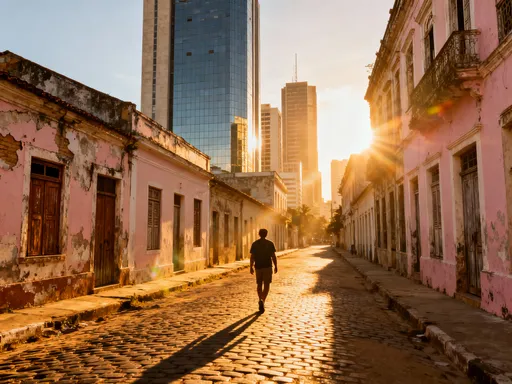
Stepping into central Luanda is like entering a living archive of contrasts. The air hums with the rhythm of construction—cranes pivot over half-finished towers while the distant clang of metalworkers echoes from backstreets. Sunlight slants across pastel-colored facades, their paint peeling like sunburnt skin, revealing layers of history beneath. These 19th-century Portuguese-era townhouses, with their arched windows and wrought-iron railings, stand shoulder to shoulder with sleek glass-fronted high-rises that shimmer in the coastal heat. The juxtaposition is not accidental; it’s the essence of Luanda’s urban heartbeat. The city’s layout, radiating outward from the old port district, follows colonial grids laid down over a century ago, yet today it pulses with a new energy shaped by decades of independence, civil conflict, and recent economic shifts.
What strikes the observant traveler is how architecture here transcends aesthetics—it becomes a narrative of resilience. Many colonial buildings, once homes to administrators and merchants, now house government offices, small businesses, or families who have adapted them to modern needs. Others remain vacant, their balconies sagging under the weight of time and tropical humidity. But even in decay, there’s dignity. The textures tell stories: water stains tracing down stucco walls like tears, bougainvillea spilling over cracked terraces, children playing football in courtyards where officials once debated policy. This is not a city frozen in nostalgia, nor one eager to erase its past. It is a city in conversation—with itself, with its history, and with the future it is still shaping.
Walking through neighborhoods like Baixa de Luanda and Ingombota, one senses the layered identity of the capital. The broad avenues, originally designed for colonial parades and military processions, now throng with moto-taxis and street vendors. The sound of hammering blends with the call to prayer from a nearby mosque and the beat of kizomba drifting from a corner bar. Every building, whether restored or abandoned, contributes to a sensory mosaic that defies simple categorization. For the visitor, the lesson is clear: to understand Luanda, you must walk it slowly, observe its details, and listen—not just with your ears, but with your eyes.
Colonial Echoes: Portuguese Urban Design in Modern Context
The heart of Luanda’s architectural legacy lies in its colonial-era structures, particularly concentrated in the Baixa de Luanda district. These buildings, constructed primarily between the late 1800s and mid-1900s, reflect a blend of Portuguese urban planning and tropical adaptation. Characterized by high ceilings that allow hot air to rise, thick stucco walls that insulate against the heat, and tiled floors that stay cool underfoot, they were engineered for comfort in a humid coastal climate. Wrought-iron balconies, often adorned with intricate scrollwork, project over narrow streets, creating shaded corridors that once facilitated social interaction among residents. The use of azulejos—glazed ceramic tiles—on exterior and interior walls was both decorative and practical, resisting moisture and adding color to otherwise plain surfaces.
Originally, these buildings served dual purposes: administrative centers for colonial governance and residences for Portuguese officials and the local elite. The governor’s palace, post office, and customs house—all located near the harbor—were designed to project authority and order. Their symmetrical facades and central courtyards reflected European ideals of control and hierarchy. Yet, over time, these spaces have been repurposed, their meanings transformed. Today, some have been restored as cultural centers, museums, or boutique hotels, breathing new life into aging structures. The National Museum of Slavery, housed in a 17th-century fort, stands as a powerful example of how historical architecture can be reclaimed to tell more inclusive stories.
However, not all colonial buildings have been so fortunate. Many remain in a state of neglect, threatened by structural decay, rising sea levels, and lack of maintenance funding. In some cases, families occupy these buildings informally, subdividing large apartments into smaller units to accommodate multiple generations. This adaptive reuse speaks to the resourcefulness of Luanda’s people, but it also highlights the challenges of preserving heritage in a rapidly changing city. The tension between preservation and progress is palpable. Some advocate for full restoration as a way to honor history, while others argue that limited resources should be directed toward new housing and infrastructure. What is undeniable is that these buildings are more than relics—they are living spaces where history and daily life intersect.
The Rise of Modernism: Post-Independence Ambitions in Concrete
As Angola gained independence in 1975, a new architectural era began—one defined by ambition, modernity, and the desire to forge a national identity. The mid-20th century had already introduced modernist influences, particularly during the late colonial period when Brazilian and European functionalist styles began to appear in public buildings. After independence, this trend accelerated. Government ministries, schools, and housing complexes were constructed with clean lines, flat roofs, and minimal ornamentation—hallmarks of modernist design. These structures reflected a vision of progress, efficiency, and collective purpose, aligning with the socialist leanings of the early post-independence government.
One can see this in buildings like the former Ministry of Education, a sprawling complex with wide concrete canopies and modular classroom units arranged around open courtyards. Or the People’s Friendship Stadium, designed with sweeping cantilevered roofs and geometric precision, symbolizing unity and strength. These were not merely functional buildings; they were statements. They said: we are building a new nation. We are forward-looking. We are no longer bound by colonial forms. The use of reinforced concrete—abundant and durable—allowed for bold, sculptural forms that stood in stark contrast to the delicate ironwork and pastel hues of earlier architecture.
Yet, the civil war that followed independence—lasting nearly three decades—interrupted this architectural momentum. Many modernist buildings suffered damage from shelling or were left incomplete due to funding shortages. Even those that survived often fell into disrepair, lacking the maintenance infrastructure to keep them operational. In recent years, some have been rehabilitated, while others remain as silent witnesses to a dream deferred. The irony is not lost on residents: buildings meant to serve the public now stand empty, their classrooms silent, their offices unused. Still, there is a growing appreciation for this period of design. Architects and historians are beginning to document these structures, recognizing them not as failures, but as important chapters in Angola’s architectural evolution.
Afro-Atlantic Fusion: Where Culture Meets Construction
Beyond the formal city plans and government projects lies a more organic form of architecture—one born of necessity, creativity, and cultural continuity. In neighborhoods like Sambizanga, Cazenga, and Viana, residents have developed a distinctive architectural language that blends Angolan traditions with available materials. Here, the courtyard house—common across Central Africa—remains a dominant layout. Families build around a central open space, fostering communal living and natural ventilation. Walls are often made from compressed earth blocks or repurposed materials, while roofs may be sheet metal or corrugated tin, painted in vibrant blues, yellows, and greens that echo traditional textile patterns.
What makes these homes remarkable is not their size or permanence, but their expressiveness. Every structure tells a story. A doorway carved with symbolic motifs, a gate painted with a family name, a rooftop shrine draped in fabric—these details reflect personal and cultural identity. In the absence of formal architectural training, residents become designers, adapting to constraints with ingenuity. A discarded shipping container becomes a shop. Old tires are stacked and filled with soil to create garden walls. Broken tiles are arranged into mosaics. This is architecture as improvisation, as resistance, as love.
Religious buildings in these areas also showcase this fusion. Small churches and prayer houses often incorporate Afro-Portuguese elements—arched windows, bell towers—but reinterpret them through local craftsmanship. Wooden beams may be carved with ancestral symbols, and interiors painted with biblical scenes in Angolan settings—Jesus walking through a Luanda market, Mary holding a child wrapped in a traditional mulemba cloth. These spaces are not replicas of European models; they are translations, rooted in both faith and cultural memory. For the visitor, they offer a rare glimpse into how architecture can be both functional and deeply meaningful, shaped not by architects, but by the people who live within it.
Rebuilding Identity: Contemporary Projects Shaping the Skyline
In the 21st century, Luanda’s skyline has been transformed by ambitious urban developments that signal a new economic era. Kilamba New Town, located about 20 kilometers southeast of the city center, is perhaps the most emblematic. Designed to house over 200,000 people, this planned community features thousands of identical apartment blocks arranged in geometric precision, connected by wide boulevards and landscaped roundabouts. Constructed with Chinese investment and engineering, the project reflects Angola’s growing ties with global markets. The architecture is modernist in spirit—clean lines, neutral tones, glass and steel accents—yet adapted to the local climate with shaded walkways and rooftop solar panels.
Similarly, the Talatona district has emerged as a hub of corporate and diplomatic activity. High-rise office towers, luxury hotels, and shopping malls now dominate this once-undeveloped area. The architectural language here is international: reflective glass facades, underground parking, climate-controlled interiors. These buildings cater to a growing middle and upper class, as well as foreign investors and expatriates. They project an image of stability, prosperity, and global integration.
Yet, these projects have sparked debate. Critics argue that Kilamba, despite its scale, remains underoccupied, with many units unaffordable for average Angolans. The lack of nearby jobs, schools, and healthcare has limited its appeal as a true urban neighborhood. In Talatona, the emphasis on security and exclusivity—gated compounds, surveillance systems, private transport—has led some to describe it as a city within a city, disconnected from the lived reality of most Luandans. Urban planners acknowledge these challenges and are beginning to incorporate more inclusive designs—mixed-use zones, public parks, pedestrian pathways—into newer phases of development. The goal is not just to build structures, but to create communities.
What these projects reveal is a city at a crossroads. On one hand, there is a clear desire to modernize, to attract investment, and to improve living standards. On the other, there is a risk of creating spaces that serve only a minority, while the majority continue to adapt and innovate in informal settlements. The true measure of success will not be the height of the towers, but the inclusivity of the design—the extent to which architecture serves all citizens, not just the privileged few.
Hidden Layers: Street Art, Markets, and the Unplanned City
While grand buildings dominate the skyline, the soul of Luanda often resides in its unplanned spaces—markets, alleyways, and repurposed structures where daily life unfolds with vibrant spontaneity. The Roque Santeiro market, once Africa’s largest informal market before its demolition in the 2010s, exemplified this energy. Though the original site has been cleared, its spirit lives on in smaller markets that have sprung up across the city. In places like Benfica and Maianga, vendors set up stalls in former colonial warehouses, turning administrative buildings into hubs of commerce. A single structure might house a tailor, a phone repair shop, a hair braider, and a food stall—all operating in close quarters, creating a dynamic ecosystem of trade and interaction.
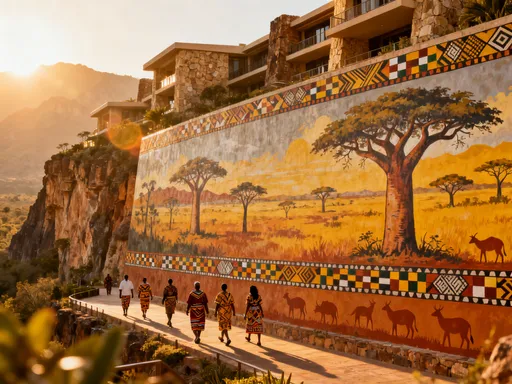
Street art has also become a powerful medium of expression. In neighborhoods like Miramar and Ingombota, blank walls—once eyesores—are now canvases for murals that depict Angolan heroes, historical events, and social messages. Some are painted by local artists, others by international collectives collaborating with community groups. These works transform neglected spaces into open-air galleries, inviting passersby to engage with art outside traditional institutions. Unlike formal architecture, which often requires permission and funding, street art emerges organically, reflecting the concerns and creativity of the moment.
Even infrastructure becomes part of this improvisation. Arches beneath overpasses become shelters for informal shops. Staircases leading to nowhere become gathering spots. Empty lots become playgrounds. This adaptive reuse demonstrates a profound understanding of space—not as fixed, but as fluid. It is a reminder that cities are not just built by planners and engineers, but lived in and reshaped by their people. For the visitor, these spaces offer some of the most authentic experiences—where commerce, culture, and community intersect in unexpected ways.
Walking the City: A Traveler’s Guide to Seeing Architecture with Meaning
To truly understand Luanda’s architecture, one must walk it. No car ride or guided bus tour can capture the nuances visible only at street level. Begin in Baixa de Luanda, arriving early in the morning when the light is soft and the streets are quiet. The golden hour illuminates the colonial facades, highlighting textures and colors that fade in the midday sun. Walk along Avenida 4 de Fevereiro, noting the contrast between old and new. Pause at the Church of Nossa Senhora dos Remédios, a baroque-style building with a commanding view of the bay, then continue toward the port, where fishing boats bob beside container ships.
From there, take a local guide—preferably one trained in urban history—to lead you through lesser-known alleys and courtyards. These guides, often residents themselves, can share stories not found in books: which building once housed a famous musician, where independence meetings were secretly held, how families have lived in the same house for generations. Their insights add depth to the physical experience. Afternoon is best spent in the newer districts. Visit Talatona to see contemporary design, but also stop by community centers or schools in Kilamba to observe how residents are adapting to planned environments.
When exploring, dress modestly and respectfully. Carry water, wear comfortable shoes, and stay aware of your surroundings. While central Luanda is generally safe for tourists, it’s wise to avoid isolated areas at night. Engage with locals when appropriate—ask permission before photographing homes or people, and always show appreciation for their hospitality. Most importantly, practice slow travel. Sit on a bench. Watch how light moves across a wall. Listen to the sounds of a neighborhood. Architecture is not just about form; it’s about life. And in Luanda, life is everywhere—in the cracks, the colors, the conversations.
For those interested in deeper exploration, consider attending a public lecture at the Agostinho Neto Memorial or visiting the National Institute of Cultural Heritage. These institutions occasionally host exhibitions on urban development, architectural photography, and preservation efforts. They offer valuable context for understanding the forces shaping the city. Whether you’re an architecture enthusiast or simply a curious traveler, Luanda rewards attention. It asks you to look closely, to think critically, and to feel deeply.
The journey through Luanda’s streets is more than a tour of buildings—it is a meditation on memory, resilience, and transformation. Each structure, whether grand or humble, preserved or repurposed, contributes to a narrative of survival and aspiration. The city does not offer easy answers or polished facades. It offers something more valuable: authenticity. It invites you to witness a capital still writing its story, not in textbooks, but in brick, mortar, and human spirit. So come with open eyes. Walk with intention. And let the walls speak.